
In today’s highly competitive business landscape, standing out from the competition is no longer optional — it’s essential. Brands face a constant challenge: how to capture consumer attention while maintaining authenticity. Brand differentiation is the process of establishing a unique position in the minds of your target audience. When done effectively, it can increase customer loyalty, drive sales, and create long-term competitive advantage.
In this article, we will explore what brand differentiation is, why it matters, and provide actionable strategies to make your brand memorable. By the end, you will understand how to develop a distinctive brand identity that resonates with your audience and thrives in a crowded market. Developing a clear brand strategy is essential for effective brand differentiation, as it ensures every aspect of your business communicates a consistent and unique message to your audience
What is Brand Differentiation?
Brand differentiation is the process of distinguishing your products, services, and overall identity from competitors in a way that is meaningful to your target audience. It goes beyond simply having a logo or catchy slogan; it involves creating a unique brand promise, personality, and experience. Differentiation can be based on tangible factors, like product quality or features, or intangible elements, such as storytelling, values, or emotional connection.
When brands successfully differentiate themselves, they gain a competitive edge that goes beyond price. Consumers are more likely to choose a brand that feels unique, trustworthy, and aligned with their values. In a crowded market, differentiation is the key to capturing attention and fostering loyalty.
Why Brand Differentiation Matters
Brand differentiation is critical because it allows your business to avoid competing solely on price. Competing on price alone can lead to shrinking margins, commoditization, and reduced customer loyalty. Differentiated brands, on the other hand, create value through identity, reputation, and emotional resonance.
Moreover, differentiation improves brand recall. When a customer encounters multiple options, a brand that stands out through its unique characteristics is more likely to be remembered. This increases the likelihood of repeat purchases and long-term engagement. In today’s saturated digital marketplace, brand differentiation isn’t just a strategy — it’s a necessity for survival.
Understanding Your Target Audience
One of the most critical aspects of brand differentiation is understanding your target audience. You cannot differentiate effectively without knowing who your ideal customers are, what they value, and what problems they need solved. Comprehensive audience research includes analyzing demographics, psychographics, pain points, and buying behavior.
Once you understand your audience deeply, you can tailor your brand messaging, visuals, and offerings to align with their expectations. Brands that resonate emotionally with their audience are more likely to achieve differentiation that lasts. Ignoring audience insights often results in generic messaging that blends into the competitive landscape.
Identifying Your Unique Selling Proposition (USP)
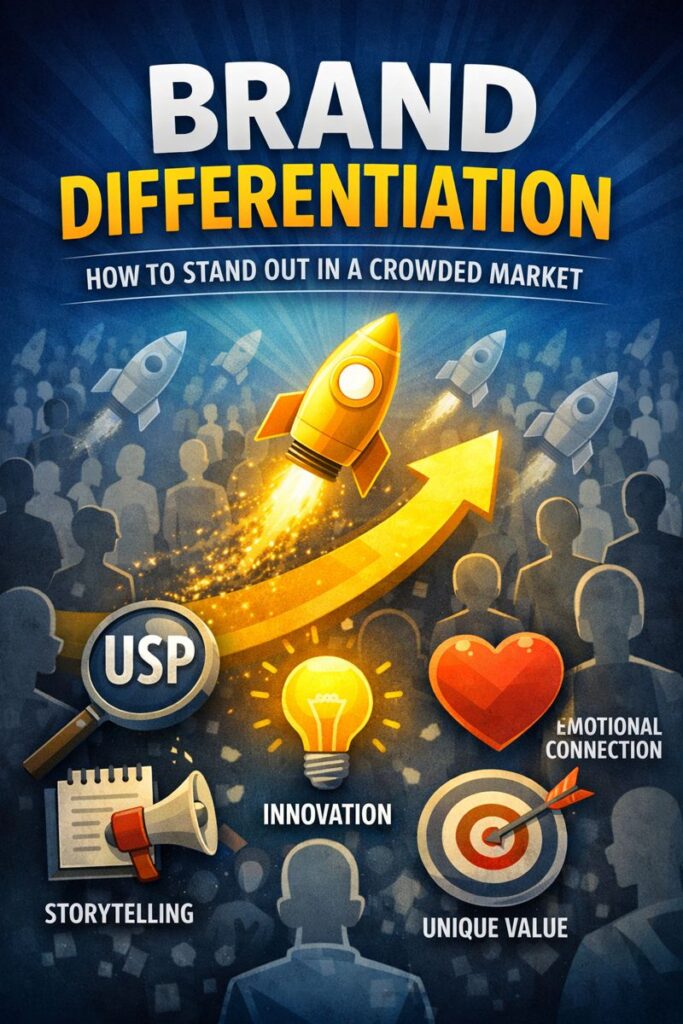
Your Unique Selling Proposition (USP) is the foundation of brand differentiation. The USP is the unique benefit or experience that sets your brand apart from competitors. To identify it, consider what makes your product, service, or brand different, and why customers should care.
A strong USP should be clear, compelling, and specific. It could be superior quality, exceptional customer service, innovative features, ethical practices, or a combination of these elements. For example, brands like Apple emphasize innovation and user experience, while Patagonia focuses on sustainability and environmental responsibility. A clearly defined USP becomes the cornerstone of all branding efforts.
Building a Strong Brand Identity
Brand identity encompasses the visual, verbal, and experiential elements of your brand. This includes logos, color palettes, typography, tone of voice, and messaging. A consistent and memorable brand identity strengthens differentiation by creating recognition across touchpoints. Design tools such as Design.com and Canva can help businesses create cohesive visual assets. An AI logo maker, for example, can simplify the process of creating a recognizable logo.
Investing in high-quality design and consistent messaging signals professionalism and reliability. Beyond visuals, brand identity also includes the personality and values your brand communicates. Brands with strong identities are easier to remember, more relatable, and more likely to create loyal followers.
Leveraging Brand Storytelling
Storytelling is one of the most powerful tools for brand differentiation. People connect with stories on an emotional level, and a compelling brand story can make your business stand out. Your story should communicate your origins, values, mission, and vision in a way that resonates with your audience.
Effective storytelling goes beyond marketing slogans — it creates a narrative that customers want to be part of. Brands like Nike and Coca-Cola excel in storytelling, turning products into symbols of aspiration, community, and emotion. By integrating storytelling into marketing campaigns, social media, and content, brands can create deeper connections and stronger differentiation.
Innovating Your Product or Service
Innovation is a tangible way to differentiate your brand. Offering something unique, whether through design, features, or user experience, helps your brand stand out in a saturated market. Innovation does not necessarily require inventing entirely new products; it can involve improving existing offerings or delivering them in new ways.
Consumers often remember brands that surprise or delight them. Innovation can also reinforce your brand’s USP, making your messaging more credible. Brands like Tesla differentiate through technological innovation, while smaller companies can differentiate by introducing creative solutions tailored to niche audiences.
Building Emotional Connections
Emotional branding is a highly effective differentiation strategy. Brands that evoke emotions such as joy, trust, nostalgia, or inspiration are more likely to foster loyalty. Emotional connections influence buying behavior because people often make decisions based on feelings rather than logic.
Creating an emotional connection involves understanding your audience’s values and aspirations. Personalized experiences, storytelling, social responsibility, and community engagement can all evoke strong emotions. By appealing to the heart as well as the mind, brands can differentiate in a way that competitors cannot easily replicate.
Using Brand Experience as a Differentiator
Brand experience encompasses every interaction a customer has with your business. This includes website usability, customer service, packaging, post-purchase support, and even social media interactions. A seamless, enjoyable experience strengthens differentiation and reinforces your brand promise.
Customers often share experiences, both positive and negative, which can significantly influence brand perception. Brands like Amazon excel in differentiation by offering consistently reliable and convenient experiences. Investing in customer experience ensures that your differentiation is tangible and memorable, not just theoretical.
Positioning Your Brand in the Market
Brand positioning is how your brand is perceived relative to competitors. Effective positioning highlights your differentiation and communicates why customers should choose you over others. It involves defining the space your brand occupies in the minds of consumers and consistently reinforcing it across channels.
Positioning requires a clear understanding of competitor strengths and weaknesses. By analyzing gaps in the market and emphasizing your unique strengths, your brand can carve out a niche. Proper positioning ensures that your differentiation is visible, understandable, and compelling to your audience. A strong brand positioning strategy clarifies your market presence and communicates your unique value, making it easier for customers to understand why your brand is the best choice.
Leveraging Digital Marketing for Differentiation
Digital marketing is a critical tool for communicating your brand differentiation. Social media, email marketing, search engine optimization, and content marketing allow brands to share their unique story and engage with audiences at scale. Consistent messaging across digital channels reinforces your brand identity and USP.
SEO, in particular, helps your brand become discoverable to those searching for solutions you provide. Optimized content that highlights your differentiation can attract qualified traffic and position your brand as an authority. Digital platforms also offer opportunities for interactive engagement, further solidifying your brand’s unique presence.
Case Studies of Successful Brand Differentiation
Examining successful examples of brand differentiation provides valuable lessons. Brands like Apple, Tesla, Nike, and Patagonia show how innovation, emotional connection, and storytelling can create a competitive edge.
Apple differentiates through sleek design, user-friendly interfaces, and a culture of innovation. Tesla’s brand stands out with its sustainability mission and technological breakthroughs. Nike uses motivational storytelling and aspirational messaging to inspire loyalty. Each case demonstrates that consistent application of differentiation strategies can yield long-term success.
Measuring the Impact of Brand Differentiation
Measuring the effectiveness of brand differentiation is essential to ensure your strategy works. Key performance indicators (KPIs) include brand awareness, customer loyalty, engagement metrics, sales growth, and market share. Surveys and feedback can also provide insight into how consumers perceive your brand versus competitors.
Monitoring these metrics allows brands to refine strategies and identify areas for improvement. Effective differentiation is not static; it evolves with market trends, consumer behavior, and competitive landscapes. Brands that continuously assess and adapt maintain relevance and a competitive edge.
Challenges in Brand Differentiation
Differentiation is not without challenges. Markets are crowded, and competitors may quickly imitate successful strategies. Additionally, overcomplicating a brand message can confuse consumers and dilute differentiation efforts.
To overcome these challenges, brands must remain authentic, consistent, and focused on their USP. Continuous innovation, audience research, and clear communication are essential to sustain differentiation. Brands that navigate these challenges successfully are positioned to achieve long-term growth and recognition.
Conclusion
Brand differentiation is the cornerstone of business success in a crowded market. By understanding your audience, defining a compelling USP, building a strong identity, and creating emotional connections, your brand can stand out. Differentiation is not just about being different; it’s about being memorable, relevant, and meaningful to your customers.
Incorporating strategies like storytelling, innovation, exceptional customer experience, and consistent digital marketing ensures your brand leaves a lasting impression. In an era of endless choices, differentiation is what separates thriving brands from those that fade into obscurity.
