
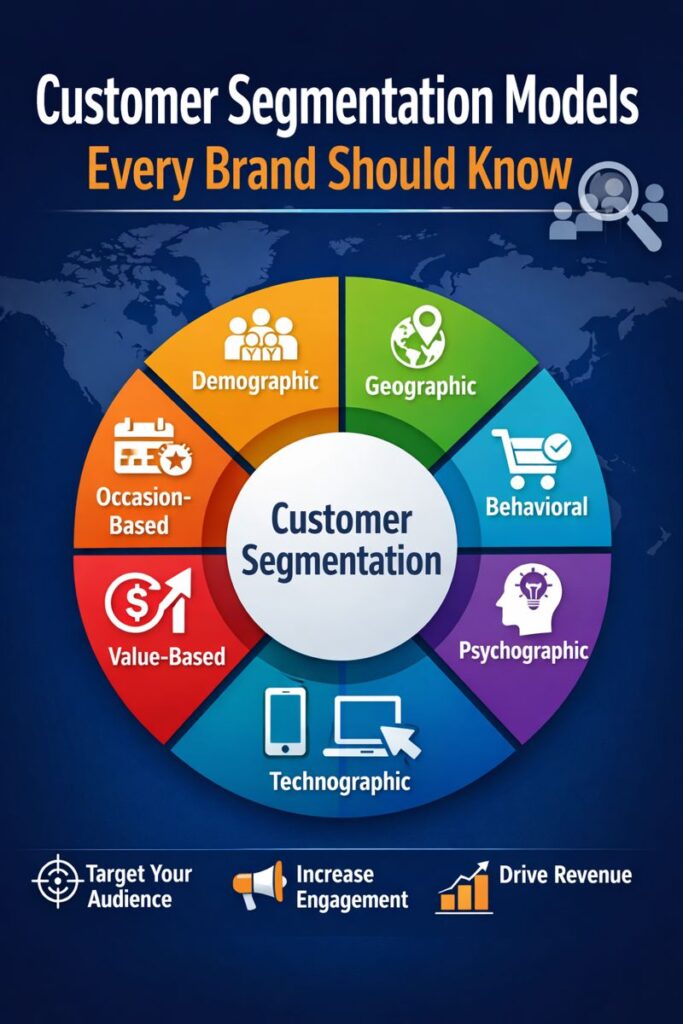
In today’s competitive market, understanding your customers is no longer optional—it’s a necessity. Brands that effectively segment their audience can tailor their messaging, products, and campaigns to meet the unique needs of distinct customer groups. Customer segmentation not only improves marketing efficiency but also drives loyalty, boosts revenue, and enhances overall brand perception. In this article, we’ll explore the most effective customer segmentation models every brand should know, why they matter, how to implement them, and the advanced strategies brands can use to stay ahead.
What Is Customer Segmentation?
Customer segmentation is the process of dividing a broad consumer base into smaller, more manageable groups based on shared characteristics. These characteristics can range from demographic and behavioral traits to psychographic or geographic factors. By understanding these segments, brands can craft personalized experiences that resonate with their audience, ultimately leading to higher engagement and conversions.
Effective segmentation allows brands to:
- Identify high-value customer groups.
- Develop targeted marketing campaigns.
- Predict purchasing behavior.
- Enhance customer satisfaction.
- Optimize resource allocation.
For brands aiming to build long-term growth, customer segmentation is a cornerstone of brand strategy. It provides the insights needed to align messaging, positioning, and product development with audience expectations.
1. Demographic Segmentation
Demographic segmentation is the most widely used model because it relies on basic, quantifiable data. It divides Demographic segmentation is the most widely used model because it relies on basic, quantifiable data. It divides customers based on attributes such as:
- Age
- Gender
- Income
- Education level
- Occupation
- Family status
Why It Matters:
Demographics often correlate with purchasing behavior. For example, younger audiences may prioritize trendy, tech-driven products, while older consumers may value reliability and brand heritage. Income level influences price sensitivity, while education and occupation can affect product preferences.
Implementation Tips (Actionable Steps):
- Collect demographic data through surveys, social media insights, and sign-up forms.
- Segment your audience by age and income to identify purchasing potential.
- Align marketing campaigns with segment-specific preferences (e.g., luxury offers for high-income groups).
- Continuously update demographic profiles to reflect changes in your audience.
Example: A fashion retailer may use age and gender segmentation to promote casual streetwear to young adults while highlighting formal wear to professionals aged 30–45.
2. Geographic Segmentation
Geographic segmentation divides customers based on location, such as:
- Country
- Region
- City
- Climate
- Urban or rural settings
Why It Matters:
Consumers in different regions often have distinct needs and preferences. Climate, cultural trends, and local regulations can influence purchasing decisions. For instance, winter apparel brands must prioritize colder regions during seasonal campaigns.
Implementation Tips (Actionable Steps):
- Use geolocation tools in analytics platforms to identify where your customers are.
- Tailor promotions to local events or holidays.
- Adapt product offerings based on regional needs (e.g., sun care products in warmer regions).
- Use local influencers to enhance credibility within specific geographic segments.
Example: A skincare brand may launch a hydrating product line in dry climates while promoting lightweight, oil-control products in humid regions.
3. Behavioral Segmentation
Behavioral segmentation focuses on how customers interact with your brand, including:
- Purchase behavior
- Usage frequency
- Product preferences
- Brand loyalty
- Engagement with marketing channels
Why It Matters:
By analyzing customer behavior, brands can identify patterns that predict future purchases. For example, frequent buyers may be targeted with loyalty programs, while dormant customers can be re-engaged with promotional campaigns.
Implementation Tips (Actionable Steps):
- Track website clicks, email interactions, and app usage to map behavior patterns.
- Identify high-value behaviors, such as repeat purchases or referrals.
- Segment customers based on engagement frequency for targeted campaigns.
- Develop automated workflows to nurture low-engagement or dormant customers.
Example: Amazon tracks purchase behavior to recommend products dynamically, ensuring high engagement and repeat purchases.
4. Psychographic Segmentation
Psychographic segmentation explores the psychological aspects of consumer behavior, including:
- Values and beliefs
- Lifestyle
- Personality traits
- Interests and hobbies
- Social status
Why It Matters:
Psychographic insights help brands connect with customers on a deeper emotional level. For instance, a fitness brand may target consumers who value health and wellness, while a luxury brand might appeal to aspirational lifestyles.
Implementation Tips (Actionable Steps):
- Conduct surveys to uncover interests, hobbies, and lifestyle choices.
- Use social listening tools to identify values and beliefs.
- Create segment personas combining psychographic traits with demographic and behavioral data.
- Align marketing messaging with the values of each segment to enhance engagement.
Example: Outdoor gear brands target adventure enthusiasts who value sustainability and nature conservation, emphasizing eco-friendly product lines.
5. Technographic Segmentation
Technographic segmentation categorizes customers based on technology usage and preferences, such as:
- Devices used (smartphones, tablets, desktops)
- Operating systems
- Software and app usage
- Online behavior patterns
Why It Matters:
Understanding technographics allows brands to optimize user experience, improve app design, and target digital marketing more effectively.
Implementation Tips (Actionable Steps):
- Use analytics tools to track device usage and app engagement.
- Segment customers by tech-savviness to offer advanced or simplified product experiences.
- Customize digital campaigns according to device or software preferences.
- Use technographic insights to plan product development and digital feature updates.
Example: A mobile gaming company may launch app-exclusive offers for iOS users while optimizing Android experience separately.
6. Value-Based Segmentation
Value-based segmentation divides customers according to the economic value they bring to the business. Factors include:
- Revenue contribution
- Profit margin
- Purchase frequency
- Lifetime value (LTV)
Why It Matters:
Not all customers are equally valuable. By identifying high-value segments, brands can allocate resources efficiently, prioritize retention, and design premium offerings that maximize profitability.
Implementation Tips (Actionable Steps):
- Calculate lifetime value (LTV) for each customer using CRM and purchase data.
- Segment high-value customers and provide exclusive offers or VIP perks.
- Focus acquisition efforts on segments with high profit potential.
- Regularly update LTV calculations to account for changing customer behavior.
Example: Airlines frequently reward top-tier travelers with loyalty programs, upgrades, and personalized offers to retain high-value customers.
7. Occasion-Based Segmentation
Occasion-based segmentation targets consumers based on specific events or timing, such as:
- Holidays and seasonal trends
- Life events (weddings, births, graduations)
- Shopping behavior tied to specific times
Why It Matters:
Marketing based on occasions enhances relevance and boosts engagement. For example, cosmetics brands often create special holiday gift sets, while retailers promote back-to-school campaigns.
Implementation Tips (Actionable Steps):
- Identify key purchase occasions from historical sales data.
- Develop targeted campaigns around seasonal trends and special events.
- Personalize messaging to reflect the occasion (e.g., birthday discounts).
- Automate campaigns with event-based triggers for timely communication.
Example: Starbucks promotes holiday-themed beverages and seasonal promotions to capture festive buying behavior.
How to Choose the Right Segmentation Model
Selecting the most suitable segmentation model depends on your brand goals, industry, and available data. Here’s a structured approach:
- Define Your Objectives: Determine whether you want to increase sales, improve retention, or expand market reach.
- Assess Your Data: Identify the data types you have—demographic, behavioral, or psychographic—and their reliability.
- Combine Models: Multi-layered segmentation often delivers the best results. For instance, combining demographic and behavioral data provides both who your customers are and how they act.
- Test and Refine: Continuously monitor segment performance and adjust your approach based on campaign outcomes and customer feedback.
Implementing Customer Segmentation in Your Brand Strategy
Integrating customer segmentation into Brand Strategy is essential for creating cohesive, targeted campaigns. Here’s how to get started:
- Map customer journeys for each segment.
- Align messaging, tone, and channels to segment-specific preferences.
- Customize product offerings or bundles for distinct groups.
- Monitor KPIs like engagement, conversion, and retention for each segment.
For a deeper dive into Brand Strategy best practices, check out our comprehensive guide on BrandQuarterly Intelligence.
Benefits of Customer Segmentation
- Improved Marketing ROI: By targeting the right audience, brands spend less and convert more.
- Enhanced Customer Loyalty: Personalized experiences create emotional connections.
- Product Innovation: Understanding segment needs can inspire new products or features.
- Competitive Advantage: Brands that know their audience outperform those using generic marketing approaches.
Common Pitfalls to Avoid
- Over-Segmentation: Too many tiny segments can dilute resources and complicate campaigns.
- Ignoring Data Quality: Inaccurate or outdated data can mislead strategy.
- Static Segmentation: Customer behavior changes over time; regular updates are necessary.
- Neglecting Integration: Segmentation must align with broader marketing, sales, and product strategies.
Tools and Software for Customer Segmentation
Effective segmentation requires the right tools to analyze, organize, and act on customer data. Some of the most popular tools include:
- CRM Platforms – Salesforce, HubSpot, Zoho CRM
- Centralizes customer information and tracks interactions.
- Allows segmentation based on demographics, behavior, and value.
- Marketing Automation – Marketo, ActiveCampaign, Klaviyo
- Enables personalized campaigns for different segments.
- Tracks engagement metrics to refine segmentation.
- Analytics Tools – Google Analytics, Mixpanel, Amplitude
- Provides insights into user behavior and site/app engagement.
- Allows tracking of audience segments over time.
- Survey and Research Tools – Typeform, SurveyMonkey, Qualtrics
- Captures psychographic and occasion-based data.
- Provides rich insights into customer motivations and preferences.
Using these tools in combination ensures brands have a complete view of their audience, enabling smarter decisions and highly effective campaigns.
Advanced Strategies: AI-Driven Segmentation and Predictive Analytics
For brands looking to take segmentation to the next level, advanced strategies leverage artificial intelligence (AI) and predictive analytics:
- AI-Driven Segmentation:
- Uses machine learning to automatically cluster customers based on multiple data points.
- Identifies hidden patterns in purchasing behavior, engagement, and preferences.
- Enables dynamic segments that evolve with customer behavior in real-time.
- Predictive Analytics:
- Predicts which customers are likely to buy, churn, or engage with a campaign.
- Helps brands proactively target high-value or at-risk segments.
- Improves ROI by focusing resources where they’ll have the greatest impact.
Example: Netflix uses AI-driven segmentation to recommend shows based on viewing patterns, while predictive analytics anticipates which content will keep users engaged.
Actionable Steps for Brands:
- Integrate AI-powered tools with CRM and marketing platforms.
- Regularly update predictive models with fresh data for accuracy.
- Test AI-driven campaigns against traditional methods to measure performance gains.
- Use insights to optimize messaging, product recommendations, and customer journeys continuously.
Conclusion
Customer segmentation is no longer a “nice-to-have”; it’s a strategic imperative. Brands that leverage demographic, geographic, behavioral, psychographic, technographic, value-based, and occasion-based models can build stronger connections, deliver personalized experiences, and achieve sustainable growth. By integrating segmentation tools, implementing actionable strategies, and adopting AI-driven approaches, brands can future-proof their Brand Strategy and stay ahead of competitors.
FAQs
1. What is customer segmentation?
Customer segmentation is dividing your audience into smaller groups based on shared traits like demographics, behavior, or interests. It helps brands deliver personalized marketing, improve engagement, and increase conversions.
2. Why is customer segmentation important?
Segmentation allows brands to target the right customers with relevant messaging. It improves customer loyalty, optimizes marketing spend, and boosts overall business performance.
3. What are the main types of segmentation?
The main types are demographic, geographic, behavioral, psychographic, technographic, value-based, and occasion-based. Combining these models often gives the best insights for marketing strategies.
4. How do I choose the right segmentation model?
Start by defining your goals and analyzing the data you have. Use a model that aligns with your objectives, and consider combining multiple models for deeper insights.
5. What tools can help with segmentation?
CRM platforms, marketing automation software, analytics tools, and survey platforms can help. They collect, organize, and analyze data to create actionable customer segments.
