
Knowing exactly who your business serves is the foundation of effective marketing. When you clearly define your target audience, your messaging becomes sharper, your offers more relevant, and your marketing spend more efficient. Businesses that skip this step often struggle with low engagement and inconsistent results—not because their products are weak, but because they are speaking to the wrong people.
This guide outlines a practical, research-based process for identifying your target audience and using those insights to strengthen your marketing and brand strategy.
Why Defining Your Target Audience Is Essential
Every marketing decision—what you say, where you say it, and how you say it—depends on who you are trying to reach. A clearly defined audience allows you to focus on customers who are most likely to benefit from your solution and take action.
When businesses understand their audience, they typically experience higher conversion rates, better customer retention, and more consistent brand perception. In contrast, vague targeting often leads to generic messaging that fails to connect or inspire trust.
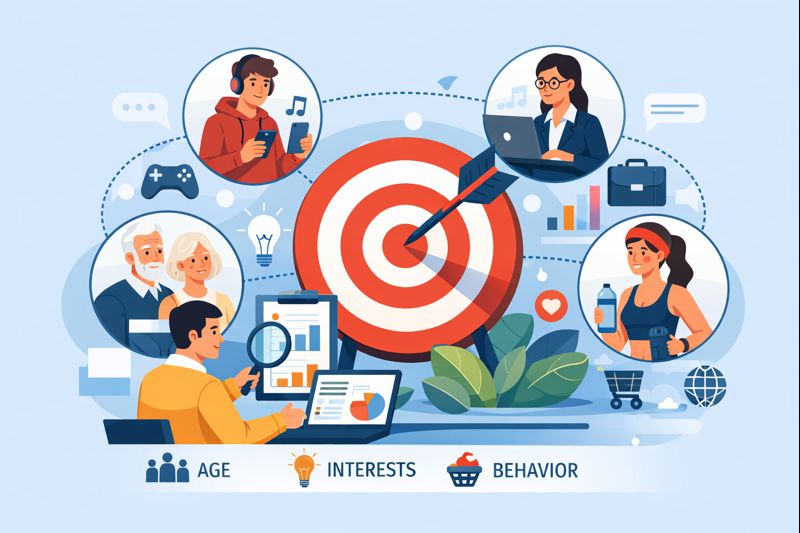
Step 1: Start With Your Existing Customers
Your current customers are the most reliable source of insight. Begin by reviewing internal data such as:
- Age ranges, locations, and occupations
- Purchase frequency and average order value
- Products or services purchased most often
Next, examine how these customers interact with your brand. Website behavior, email engagement, and social media activity often reveal patterns that are not obvious at first glance. Identifying your most profitable or loyal customers can help you uncover which audience segments are worth prioritizing.
Step 2: Research the Market Beyond Your Business
Audience identification should not stop with internal data. Market research helps you understand the broader environment in which your business operates. Study competitors to see which audiences they attract, how they communicate, and where they appear to focus their efforts.
In addition, collect direct feedback through surveys, polls, or interviews. Ask potential customers about their goals, frustrations, and decision-making criteria. Combining firsthand feedback with industry reports and trend analysis ensures your strategy is grounded in real-world data rather than assumptions.
Step 3: Define Who They Are and What Drives Them
At this stage, organize your findings into two categories:
- Demographics: measurable traits such as age, income level, education, location, and job role
- Psychographics: attitudes, values, interests, habits, and motivations
While demographics explain who your audience is, psychographics explain why they make certain choices. Two individuals with similar backgrounds may respond very differently to the same message, which is why this combination is essential for effective targeting.
Step 4: Break Your Audience Into Meaningful Segments
Rather than treating your audience as a single group, divide it into smaller segments based on shared characteristics or behaviors. Segmentation can be built around factors such as purchasing intent, lifestyle, experience level, or specific needs.
This approach allows you to deliver more relevant messages and avoid one-size-fits-all marketing. By focusing on the segments with the greatest growth or revenue potential, you can also allocate your resources more strategically.
Step 5: Build Clear Customer Profiles
Customer profiles (often called personas) translate research into realistic representations of your ideal buyers. Each profile should include background details, goals, challenges, and how your product or service fits into their decision-making process.
For example, instead of targeting “small business owners,” you might focus on “a startup founder managing growth with limited time and budget.” These profiles help ensure that marketing, sales, and product teams are aligned around the same audience understanding.
Step 6: Observe How Your Audience Behaves
Audience definition is incomplete without behavioral insight. Analyze how different segments interact with your website, content, and campaigns. Look for trends such as:
- Preferred devices and platforms
- Content formats that drive engagement
- Common drop-off points in the buying journey
Behavioral data helps you refine your approach and anticipate future actions, allowing you to remove friction and improve overall customer experience.
Step 7: Identify the Problems They Actively Want to Solve
Effective marketing connects directly to real problems. Identify the challenges your audience is already trying to overcome, not just the features they say they want. These pain points often emerge through customer feedback, online discussions, reviews, and support inquiries.
When your messaging clearly addresses a specific problem and explains how your solution improves the customer’s situation, trust and relevance increase significantly.
Step 8: Select Channels That Match Audience Habits
Not every platform is right for every audience. Determine where your target segments spend their time and how they prefer to consume information. Some audiences respond best to short-form video, while others prefer in-depth articles, email updates, or professional networks.
Choosing channels based on actual audience behavior ensures your content appears in the right context, increasing visibility and engagement.
Step 9: Test, Measure, and Adjust
Audience identification is not a one-time exercise. Monitor campaign performance, test different messages, and compare results across segments. Metrics such as click-through rates, conversions, and retention provide valuable signals about what is working.
Regular testing allows you to adapt as customer needs, market conditions, and competitive landscapes change over time.
Step 10: Apply Audience Insights Across Your Brand
Finally, integrate what you’ve learned into every aspect of your business. Audience insights should influence content creation, product development, pricing decisions, and customer support—not just marketing campaigns.
When your brand consistently reflects a deep understanding of its audience, it becomes easier to build credibility, loyalty, and long-term growth.
Final Thoughts
Identifying your target audience is an ongoing process that evolves alongside your business. By combining data analysis, research, and continuous testing, you can develop a clear picture of who your customers are and how to serve them effectively.
A well-defined audience brings focus to your marketing, strengthens your brand strategy, and creates a solid foundation for sustainable success.
