
Brands today are judged by their experiences, emotions they evoke, and communication consistency. Brand guidelines are powerful assets. Without clear direction, even strong brands may appear inconsistent or confusing.
Brand guidelines ground a brand’s identity system. They define presentation visually, verbally, and emotionally at all touchpoints. From social posts to packaging and scripts, guidelines ensure each interaction reinforces a unified brand message.
This guide for BrandQuarterly.com covers what brand guidelines should include, why they matter, and how they foster trust and loyalty. Whether creating or refining your brand, understanding these principles is key to growth.
What Are Brand Guidelines?
Brand guidelines, also called brand standards or style guides, are documented rules for presenting a brand. They cover logo use, color palettes, tone, and messaging. These rules help everyone represent the brand consistently and accurately.
Brand guidelines define a brand’s personality, values, and position. Marketers, designers, writers, and partners learn not only how the brand looks but how it acts and communicates. Every content piece then feels aligned and authentic.
Brand guidelines end guesswork. Teams rely on a single reference to maintain branding cohesion and recognition.
Why Brand Guidelines Matter
Brand consistency drives trust and recognition. When people see a brand presented consistently, they associate it with reliability and professionalism. Over time, familiarity fosters an emotional connection and increases the likelihood that customers choose your brand.
Strong brand guidelines support your overall brand strategy by ensuring consistent messaging, visuals, and customer experiences across every channel.
Without brand guidelines, brands often suffer from fragmented communication. Different teams may use different tones, visuals, or messaging styles, leading to confusion and diluted brand impact. This inconsistency weakens brand equity and makes it harder for customers to understand what the brand truly stands for.
Brand guidelines also improve operational efficiency by providing clear expectations. Key takeaway: Well-documented guidelines empower teams to work faster and with fewer mistakes, supporting both quality and speed.
What to Include in Brand Guidelines
A strong brand guideline document is more than a logo manual. It captures the brand’s identity, strategy, and personality while providing practical direction for everyday execution. Key takeaway: Comprehensive guidelines ensure every team has the direction needed to maintain brand consistency and impact.
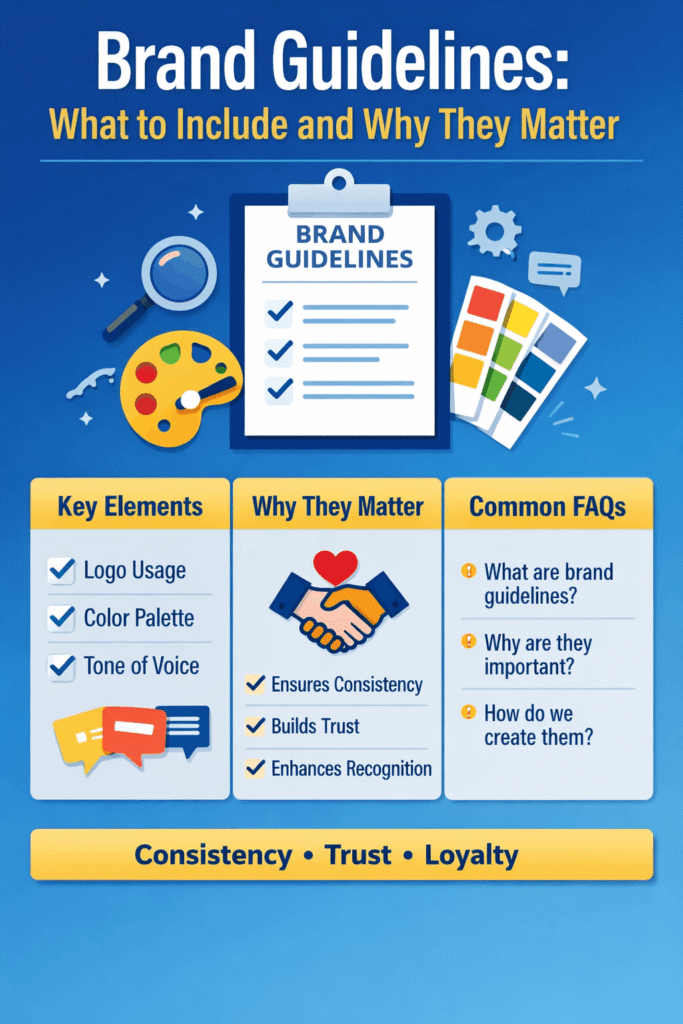
1. Brand Purpose, Mission, and Vision
Your brand purpose defines why your business exists beyond profit. It communicates the deeper reason you serve your customers and the impact you aim to make in the world. Including this in your brand guidelines ensures that marketing and communication efforts remain aligned with long-term goals rather than short-term metrics.
The mission statement explains what your business does, who it serves, and how it delivers value. Meanwhile, the vision statement outlines where the brand aspires to go. Together, these statements create strategic alignment across departments and campaigns.
By documenting purpose, mission, and vision, teams can communicate with intention and authenticity. This strengthens storytelling and ensures every message reflects the brand’s core direction.
2. Brand Values and Personality
Brand values define the beliefs that shape how your company acts, makes choices, and speaks to its audience. Whether your brand prioritizes innovation, transparency, sustainability, or customer-centricity, these values should be clearly defined in your guidelines. This ensures that internal teams and external partners reflect those values in everything they create.
Brand personality describes how your brand would act if it were a person. Is it friendly and conversational, bold and confident, or thoughtful and refined? Defining this personality helps writers and marketers maintain emotional consistency across messaging.
Including values and personality in your brand guidelines also supports internal culture. Key takeaway: Clear articulation of values and personality helps teams embody and consistently express your brand.
3. Target Audience and Brand Positioning
Brand guidelines should clearly define who the brand is speaking to. This includes outlining customer demographics, psychographics, behaviors, motivations, and pain points. When teams understand their audience deeply, they can create content that feels relevant, helpful, and emotionally engaging.
Brand positioning explains how your brand is different from competitors and what unique value it offers. It clarifies where the brand fits in the market and why customers should choose it over alternatives. Including this ensures that messaging remains consistent and strategically differentiated.
When audience insights and positioning are documented, teams can align messaging, visuals, and tone with real customer needs. Key takeaway: Clear target audience and positioning statements drive relevant, engaging, and effective brand communication.
4. Logo Usage Guidelines
Your logo is often the most visible and recognizable element of your brand identity. Brand guidelines should define how the logo should be used, including size, spacing, placement, and acceptable background treatments. These rules ensure that the logo remains clear, legible, and visually balanced across platforms.
It’s equally important to include examples of incorrect logo usage. This might involve stretching, rotating, recoloring, adding effects, or placing the logo on visually cluttered backgrounds. Showing what not to do helps prevent mistakes that weaken brand consistency.
By standardizing logo usage, brands protect their visual integrity. Key takeaway: Logo guidelines ensure brand recognition and maintain trust across all platforms.
5. Color Palette
Colors strongly influence how people interpret a brand and the emotional response they associate with it. Brand guidelines should specify primary, secondary, and accent colors, along with precise color codes such as HEX, RGB, CMYK, and Pantone values. This ensures accurate reproduction across both digital and print media.
Guidelines should also explain how colors should be applied in different contexts. For example, primary colors may dominate layouts, while accent colors highlight calls to action or key information. This helps maintain visual hierarchy and brand coherence.
Consistent color usage strengthens brand recognition over time. Key takeaway: A clearly defined color palette boosts recall and emotional connection to your brand.
6. Typography
Typography significantly influences brand tone and readability. Brand guidelines should define primary and secondary fonts, including rules for headlines, body text, captions, and interface elements. This ensures visual consistency and professional presentation across platforms.
Details such as font weights, spacing, alignment, and hierarchy should also be documented. Without these standards, typography choices can become inconsistent, weakening brand cohesion and user experience.
Standardized typography makes content easier to read and more recognizable. Key takeaway: Strong typography guidelines make your messages clear, professional, and uniquely yours.
7. Imagery and Photography Style
Imagery shapes how people emotionally experience a brand. Brand guidelines should define the style, mood, lighting, composition, and subject matter of photography and illustrations. This ensures that visuals consistently support your brand story and values.
Guidelines should also specify which types of images to avoid, such as overly generic stock photos or visuals that conflict with the brand’s positioning. This helps maintain authenticity and prevents misaligned communication.
By standardizing visual direction, brands create a cohesive and emotionally resonant experience across websites, social media, advertising, and print materials. Key takeaway: Consistent imagery and photography reinforce your brand’s identity and emotional appeal.
8. Iconography and Graphic Elements
Beyond logos and photography, brands often use icons, patterns, shapes, textures, and illustrations to enhance visual identity. Brand guidelines should define how these elements are designed and applied to maintain consistency across all touchpoints.
This includes specifying line styles, corner radii, color usage, stroke weights, and spacing rules. Without this structure, supporting graphics may feel disconnected or visually inconsistent with the brand system.
Well-designed graphic elements improve usability, storytelling, and visual clarity. Key takeaway: Consistent use of icons and graphics reinforces your brand’s identity and enhances user experience.
9. Tone of Voice and Messaging Style
Your tone of voice defines how your brand sounds when it communicates. Brand guidelines should describe the emotional tone, vocabulary preferences, sentence structure, and communication style your brand uses. Whether your brand voice is friendly, authoritative, inspirational, or witty, clarity ensures consistency.
Guidelines should also include examples of on-brand and off-brand messaging. These examples help writers understand how to apply tone across different scenarios, including marketing, customer service, social media, and internal communication.
Maintaining the same communication style helps audiences feel confident in and connected to a brand. When customers recognize your brand’s communication style, they feel more comfortable engaging with your brand and developing long-term loyalty.
10. Brand Story and Messaging Framework
A strong brand story explains who you are, what you believe, and why you exist in a way that emotionally resonates with your audience. Including this story in your brand guidelines ensures that every campaign and communication reinforces the same narrative.
Messaging frameworks often include key messages, value propositions, elevator pitches, taglines, and brand promises. These tools give teams ready-to-use language that aligns with positioning and business goals.
By documenting your brand story and messaging structure, you create clarity, alignment, and confidence acreoss teams. This strengthens brand credibility and ensures consistent communication throughout the customer journey.
11. Digital and Social Media Guidelines
In today’s digital-first environment, brands must maintain consistency across websites, apps, email campaigns, and social platforms. Brand guidelines should define how visuals, tone, emojis, hashtags, formatting, and engagement styles should be used online.
Social media guidelines should also include platform-specific considerations, such as caption length, posting frequency, community management tone, and crisis response protocols. These details help teams stay on-brand while adapting to different channel dynamics.
Clear digital guidelines protect brand reputation and improve efficiency. They enable faster content creation while ensuring that every online interaction reinforces brand identity and trust.
12. Print and Offline Applications
While digital marketing dominates modern branding, offline materials remain critical for many industries. Brand guidelines should include standards for print assets such as business cards, brochures, packaging, signage, presentations, and event materials.
These guidelines should specify layout rules, spacing, typography usage, color treatments, and image placement for physical formats. This ensures consistency regardless of production vendor or medium.
By including offline applications, brands ensure that their identity translates seamlessly from screens to physical environments. This consistency strengthens recognition and reinforces brand professionalism.
13. Brand Applications and Templates
To make brand guidelines more practical and user-friendly, many organizations include real-world examples and templates. These may include business card layouts, presentation slides, email signatures, social media post designs, and marketing collateral samples.
Providing templates reduces friction for teams and partners by eliminating guesswork. Instead of starting from scratch, users can apply pre-approved designs that already align with brand standards.
Templates also improve efficiency and scalability. As teams grow or work with external agencies, standardized assets ensure faster execution while maintaining visual and verbal consistency.
14. Accessibility and Inclusivity Standards
Modern brands are increasingly responsible for ensuring that their communication is accessible and inclusive. Brand guidelines should include rules for color contrast, font readability, alt text usage, and language clarity to support diverse audiences.
Inclusive language guidelines help teams avoid biased, exclusionary, or insensitive terminology. This ensures that messaging respects cultural, social, and identity differences while remaining welcoming and professional.
By embedding accessibility and inclusivity into brand standards, businesses demonstrate social responsibility. This strengthens brand trust, expands reach, and fosters deeper emotional connections with broader audiences.
15. Governance and Brand Management Rules
Brand guidelines should also clarify who owns the brand, who approves creative work, and how updates are managed. This governance structure prevents misuse and ensures accountability across teams and partners.
Guidelines may include approval workflows, review processes, and escalation paths for brand-related decisions. This reduces risk and maintains consistency as the organization scales.
Clear brand governance protects brand equity over time. It ensures that as new teams, markets, and platforms emerge, the brand evolves strategically rather than inconsistently.
Benefits of Strong Brand Guidelines
One of the biggest benefits of brand guidelines is consistency. When visuals, tone, and messaging align across channels, customers develop stronger recognition and trust. This consistency builds brand equity and makes marketing efforts more effective over time.
Another major advantage is efficiency. Teams spend less time debating design choices or rewriting content when standards are clearly defined. This accelerates production, reduces revisions, and improves collaboration across departments and agencies.
Brand guidelines also support scalability. As businesses grow, onboard new employees, enter new markets, or work with external partners, brand standards ensure that identity remains intact regardless of who creates the content.
How to Create Effective Brand Guidelines
Start by clearly defining your brand’s strategy, values, and positioning before designing visuals. Strong brand guidelines are rooted in purpose, not just aesthetics. This ensures that every design and messaging decision aligns with business goals.
Next, document your visual and verbal systems in clear, simple language. Use examples, diagrams, and templates to make guidelines easy to understand and apply. The more practical your document is, the more likely teams are to follow it.
Finally, treat brand guidelines as a living document. As your brand evolves, markets shift, and platforms change, regularly update your guidelines to stay relevant and effective.
Common Mistakes to Avoid
One common mistake is creating overly rigid guidelines that limit creativity. While consistency is important, guidelines should empower teams rather than restrict innovation. The best brand standards balance structure with flexibility.
Another mistake is making guidelines too vague or incomplete. Without clear examples, rules, and use cases, teams may interpret standards differently, leading to inconsistent execution.
Lastly, many brands fail to distribute or enforce their guidelines. A brand guide that lives in a forgotten folder has no impact. Make your guidelines accessible, train teams on how to use them, and integrate them into daily workflows.
Why Brand Guidelines Are a Strategic Investment
Brand guidelines are not just a design document — they are a business asset. They protect brand equity, improve operational efficiency, and strengthen customer trust. Over time, consistent branding reduces marketing costs by increasing recognition and recall.
They also enhance customer experience by creating seamless interactions across touchpoints. Whether someone visits your website, reads your emails, or sees your ads, they encounter the same voice, visuals, and values.
Ultimately, brand guidelines support long-term growth. They enable brands to scale confidently, enter new markets effectively, and maintain identity integrity while evolving strategically.
Final Thoughts
Brand guidelines are the backbone of a strong, consistent, and trusted brand identity. They align teams, streamline workflows, and ensure that every customer interaction reflects your brand’s purpose, values, and personality. Without them, even the best-designed brands risk becoming fragmented and forgettable.
By including elements such as purpose, positioning, logo usage, colors, typography, tone of voice, imagery, and messaging frameworks, you create a comprehensive system that supports clarity and cohesion. These guidelines empower teams to communicate confidently while protecting brand integrity.
For brands aiming to build recognition, loyalty, and long-term success, investing in well-crafted brand guidelines is not optional — it’s essential.
FAQ
Q1: What are brand guidelines?
Brand guidelines are rules that define how a brand should look, sound, and communicate across all platforms.
Q2: Why are brand guidelines important?
They help maintain consistency, build trust, and improve brand recognition across all customer touchpoints.
Q3: What should brand guidelines include?
They usually include logo usage, color palette, typography, tone of voice, and messaging standards.
Q4: Who should use brand guidelines?
Anyone creating brand content, including designers, marketers, agencies, and partners.
